
Tibetan Hairstyle Guide
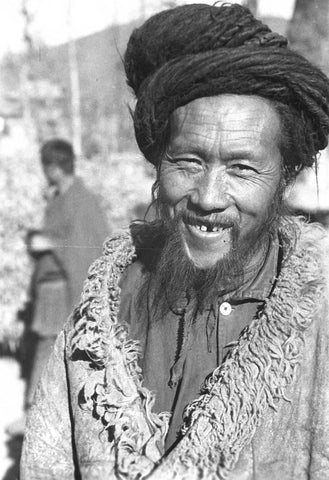
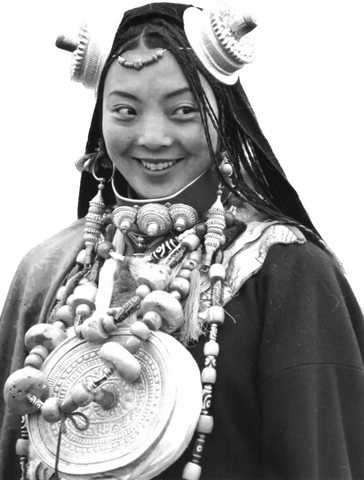
Photo by Harrison Forman
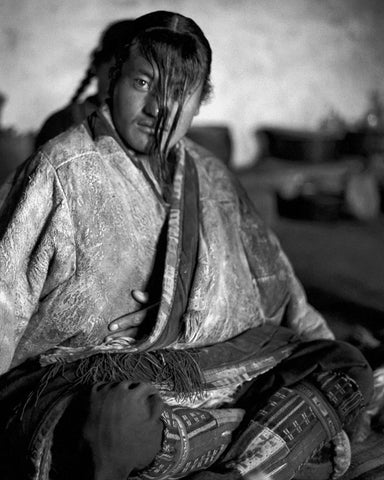
Featuring Yuen Shenye, photographed
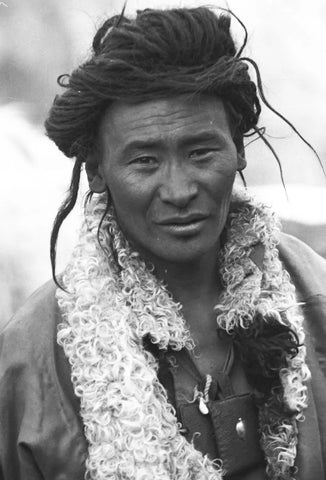
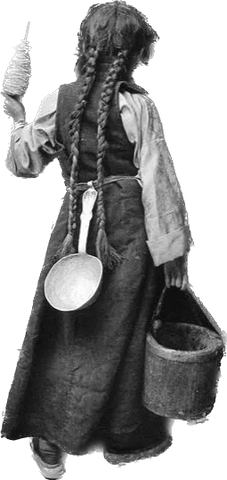
Photo by Harrison Forman
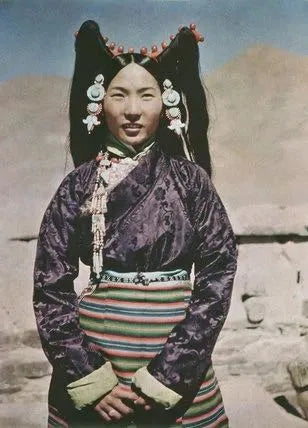
Photographed by Chapman
Tibetan hairstyle
Symbol of identity
A deeper understanding of Tibetan culture can be achieved through many different fields and perspectives. One unique but important aspect of Tibetan culture is the interpretation of Tibetan hair styles from both an aesthetic and cultural perspective.
Throughout history, people in different regions of Tibet have had varying preferred hair styles that have continued to evolve over time. The choice of hairstyle and the hair itself hold a wealth of complex information that may go beyond our daily understanding.
Tibetan hairstyles are perhaps among the most charming and distinctive in the world's ethnic cultures. In addition to considerations of aesthetics and functionality, different hairstyles in Tibet also reflect a person's marital status, social status, and spiritual pursuits, especially for women.
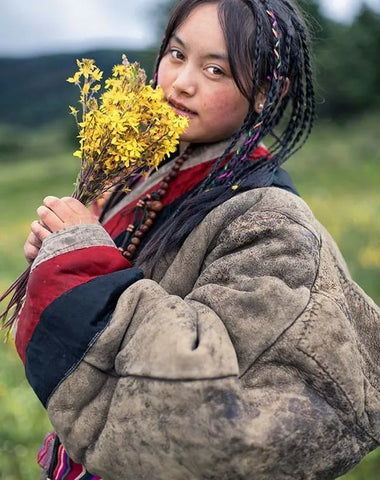
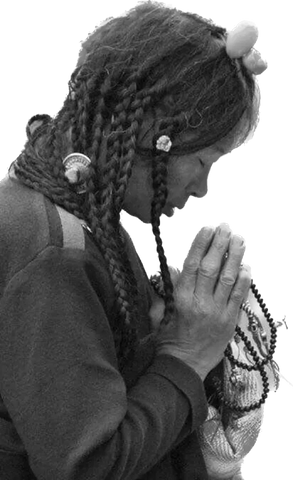
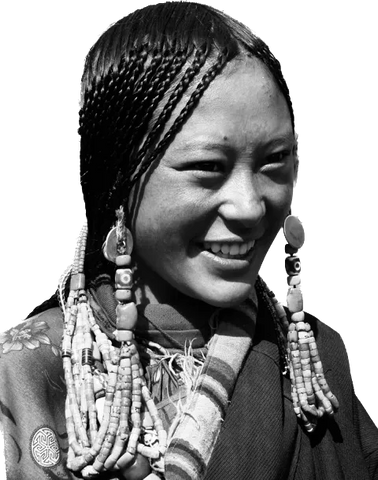
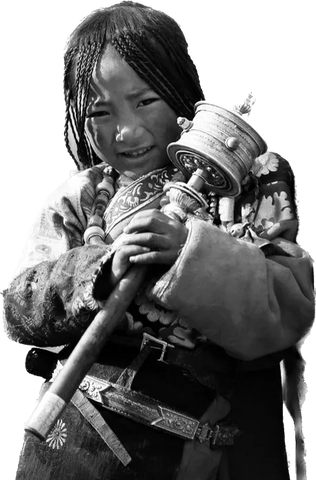
The law of development of things dictates that traditional customs will inevitably be improved, updated, or even replaced with the emergence of new things. However, as a long-standing aesthetic standard, even as the world changes, the cultural connotations it contains will never dim, and may even become more dazzling with the passage of time, showcasing a whole new meaning.
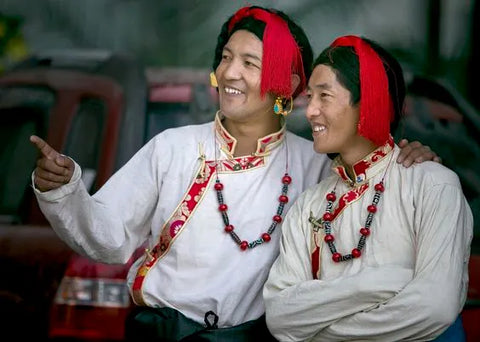
Noble Paradigm
Through some early images, we can understand the daily attire of Tibetans in earlier times.
Generally, the hairstyle of Tibetan men varies according to the class they belong to. The upper class, consisting of nobles and aristocrats, required their male family members to adopt a specific hairstyle starting from the age of 16. This hairstyle typically involves long hair being tied up into a topknot or bun, adorned with gemstones, primarily turquoise. The topknot would also contain a Ghau box made of gold or silver, used for protection against evil spirits.

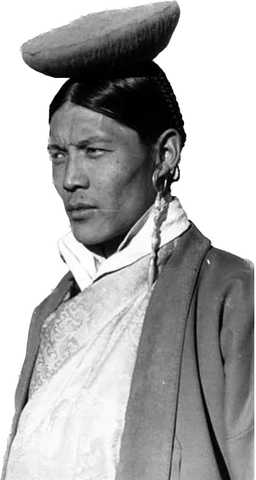
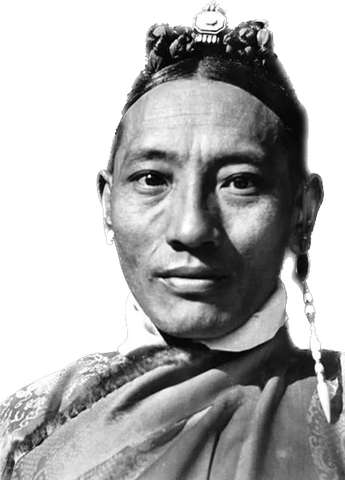
Photography: Frederick Spencer Chapman
The hairstyle for men in the middle class is mainly a long braid, with the front hair parted in a slicked back style with hair oil attached to the scalp and split towards both sides. Men in pastoral and ordinary people areas tend to be more casual and free, usually opting for loose hair or a long braid. There are almost no expensive gemstone adornments.
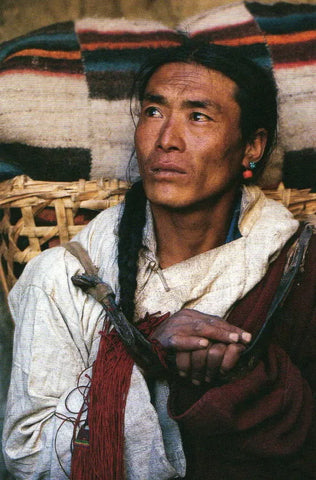
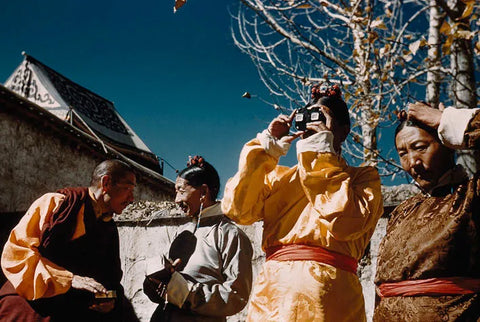
Haircut Ceremony
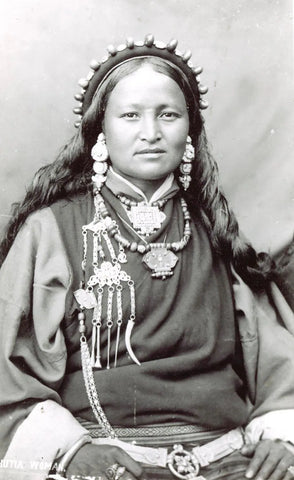
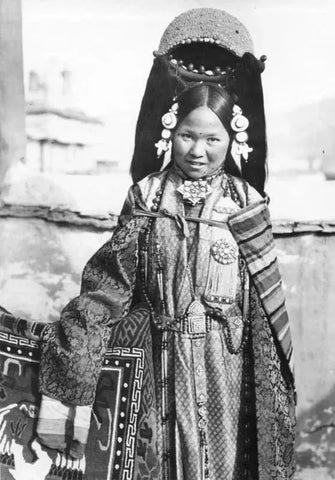
In Tibetan tradition, the vast majority of women are accustomed to braiding their hair. This hairstyle is rich in Tibetan ethnic style and exquisite beauty. However, the braiding process can be complex and tedious, and the weaving of the hair is also imbued with unique meanings.
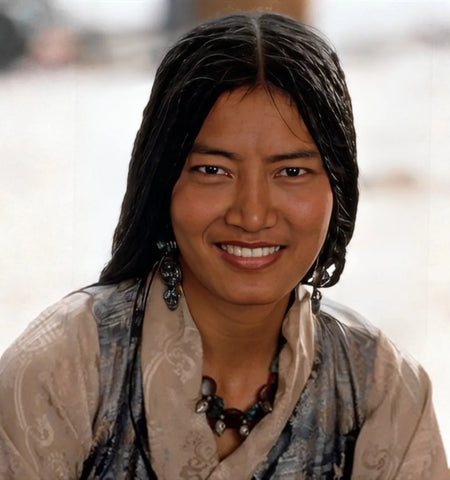
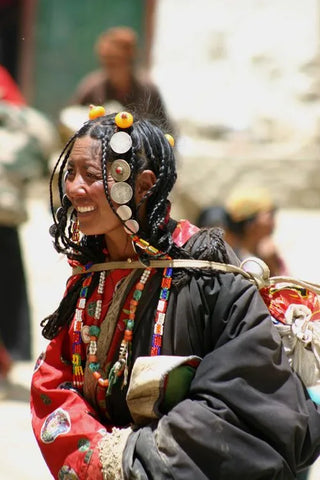
The coming-of-age ceremony is an important ritual for Tibetan women, almost as significant as marriage in their lives. During the preparation for the ceremony, a senior female relative is specially chosen to assist in styling and decorating the young woman's hair.
As the central figure in this ceremony, this role is not something that just anyone can fulfill. The chosen woman must possess qualities such as diligence, kindness, intelligence, and sincerity. Furthermore, she must be physically and mentally strong, without any history of injury or illness. Women with poor character or unhappy marriages are usually excluded from this role. Typically, only elderly women with a respectable reputation are selected. The hair styling ceremony often requires several people and several hours of teamwork to complete. If done well, the person in charge of the styling may receive generous rewards from the host family.
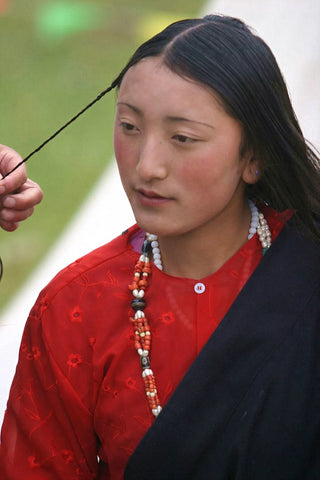 Image: Pinterest
108 braids
However, hairstyles in Tibetan areas vary widely due to their vast geographical location and the meanings they carry. Not all Tibetan women in different regions have braided hair. Different regions and cultural customs result in significant differences in hairstyle choices for Tibetan women.
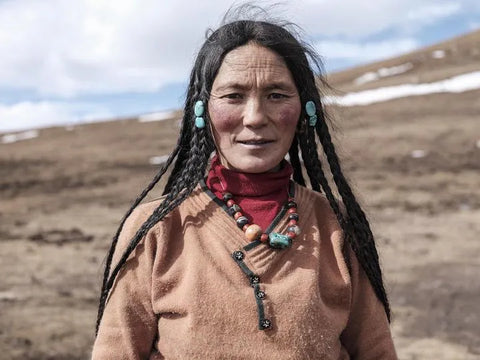
Generally, women in rural areas prefer to wear only two braids in their daily lives. These braids are often adorned with a few colorful threads as special decorations. The braids can hang down or be coiled on top of the head. It is rare to see large, bright gemstones intricately woven into the braids, with only a few additional decorations added for festive occasions. Women in eastern Tibetan regions, on the other hand, tend to favor multiple braids, with a specific number chosen, such as 108.
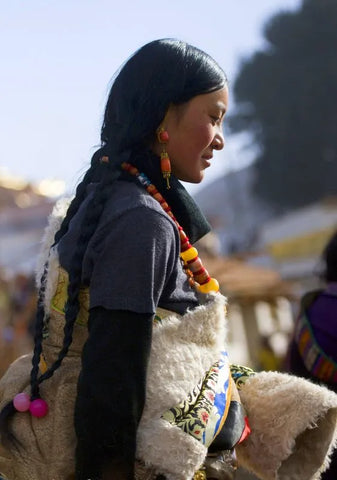 Image: Mardiana Ika
The number 108 holds a special symbolic significance in Buddhist culture. When Tibetans recite mantras, they often use a mala with 108 beads, symbolizing the eradication of 108 kinds of afflictions as the beads are counted. This helps the practitioner reach a state of wisdom and concentration. Similarly, if a woman has 108 braids in her hair, it often symbolizes spiritual completeness and enlightenment.
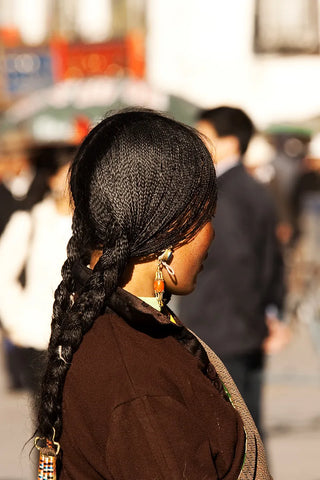 Image: dailytravelphotos
As times and society evolve, people's lifestyles and beliefs have changed significantly from the past. Particularly in today's era of heightened awareness of women's rights and increasing status of women, excessive attention to women's hair and elaborate decoration can make women feel burdened. After all, unlike women, society does not have the same level of standards to constrain men.
The pursuit of spiritual and life freedom allows women to break free from deep-rooted traditions, and the many meanings carried by hair are simultaneously weakened (for example, in the past in the Kamba region, the hairstyle chosen by women was believed to directly reflect their marital status, with single women wearing a single braid, while married women wearing two or more braids, and hair accessories also reflected their economic and social status).
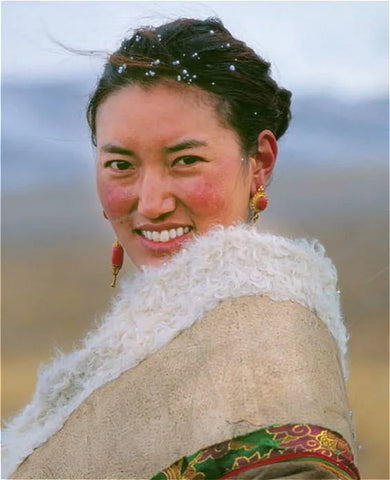 Photography: Sodo Soduo
Metaphor of hair
In traditional Tibetan culture, hair should not be treated casually.
The Confucian classic "Xiaojing" states, "The body and skin, which we received from our parents, we must not injure or damage; this is the beginning of filial piety." This reflects the importance of hair in traditional Han culture. While the prevalence of certain customs is based on specific historical backgrounds, as times and social lives change, people's interpretations of tradition will also evolve with new ideas. But regardless of whether it is a cultural essence or a quaint custom, the importance of hair cannot be underestimated in any cultural context.
The attention to hair in Tibetan culture is also widespread. However, Tibetan people do not view hair as a representation of filial piety like in Han culture. They believe that hair represents positive energy, health, vitality, brightness, and prosperity. Therefore, the importance of hair and the way people treat their hair correspondingly are extraordinary.

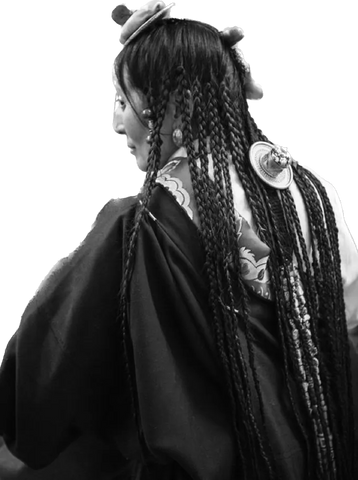
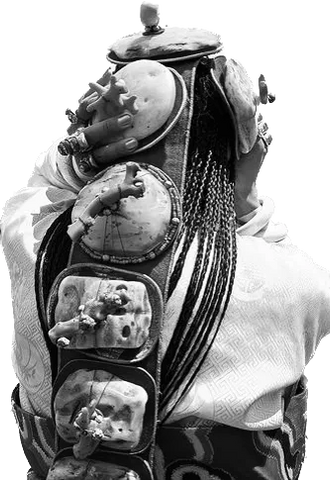
Photography: BetterWorld2010、Rosemary Sheel
Whether in religious or secular life, hair is used as an important medium in some special rituals. Take, for example, the first haircut of a newborn baby, the baby's hair first needs to be properly preserved, similar to customs on the mainland. However, in Tibetan areas, the reverence is more important than the commemorative significance. Tibetans believe that if fetal hair is not properly treated, a child's health, future, and even the prosperity of the family may be affected.
In the Amdo region, a traditional custom regarding hair is still devoutly practiced among the older generation. They collect the fallen hair when combing, carefully storing it in a secret place. The choice of location for hiding the hair is also important, it should be placed in a more sacred place compared to others, such as on the clockwise prayer wheel, a small hole in the wall, or inside a niche.
Furthermore, the traditional Tibetan emphasis on hair is also manifested in the practice where some women collect the fallen hair, and when a certain amount is gathered, out of an aesthetic need, they will incorporate these hair into their braids when combing, making their hair appear longer and denser. In any case, fallen hair should not be disposed of casually in Tibetan areas. According to Tibetan folklore, if fallen hair is discovered and collected by birds to build a nest, that person may become prematurely grey-haired.

Photography: Daniel Miller、Luca Marella
In Tibetan culture, there is a saying "without skin, how can hair adhere". Hair to some extent directly reflects a person's health status. Therefore, hair is naturally considered as a necessary item in the treatment of certain diseases in Tibet. Moreover, hair should not be casually thrown into the fire, as this behavior is seen as disrespectful to the gods and may cause anger from the spirits. As a form of retaliation, disease may befall the owner of the hair. Looking back at traditional practices through our modern lens may seem incredulous, but this is a unique Tibetan habit based on their beliefs at that time, and holds anthropological and sociological significance.
Aesthetic remnants
Of course, the elaborate traditional hairstyles are rarely seen among young Tibetans today. Cultural trends are becoming more homogeneous in the rapid spread of the internet. Historical reasons and social changes have significantly influenced people's actual lives, leading to changes in social structures and cultural customs. As a result, people's concepts and habits have also changed. For both aesthetic and practical reasons in daily life, traditional Tibetan hairstyles are clearly becoming less prominent.
However, the fading functional significance of Tibetan hairstyles, which were once closely linked to daily life, does not diminish their role as an aesthetic, an art, or as a magnificent symbol of Tibetan culture that shines like never before.
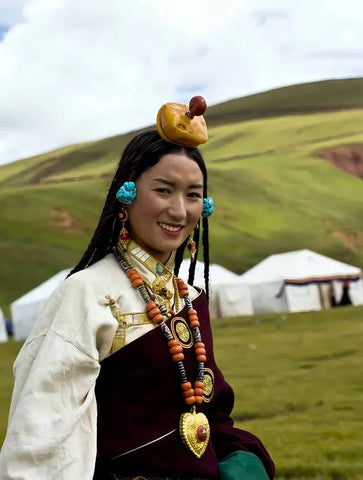 Photography: Sodo Abo